Osteoporosis – a silent disease that results in progressive bone loss over the years with many far-reaching and serious consequences. Many people are not aware of the condition until they sustain a fracture. It is predominantly seen in the older population affecting both sexes, although postmenopausal women are at higher risk. Fractures can lead to loss of function or mobility.

Risk Factors for Osteoporosis

Some risk factors for osteoporosis include:

  • Sedentary lifestyle (lack of exercise which is needed to build bone)
  • Insufficient calcium, magnesium, phosphorus and Vitamin D in the diet
  • Being underweight (BMI < 18.5kg/m2)
  • Smoking (reduces calcium absorption)
  • Older age (Bones reach their peak density at about 20 years of age and subsequently decrease with age)
  • Menopause
  • Certain medical conditions (e.g. cancer, hyperthyroidism, kidney disease)

Treatment for Osteoporosis

As bone loss is irreversible, treatment aims to prevent further bone loss & preserve the existing bone mass. Some of the medications used for treatment include the bisphosphonates such as Alendronate & Risedronate, Tibolone, Strontium Ranelate and Raloxifene. Since the medications used for osteoporosis treatment are prescription-only drugs, speak to your doctor for more information.

Tips for maintaining healthy bones

There are several ways to ensure healthy bones:

  1. Calcium Supplementation
    Calcium is required to build bones. Calcium is lost daily via urine, faeces, sweat, or shed in skin, hair and nails. If there is not enough calcium in the blood and tissues, calcium from bones will be leached out to replace the deficiency, eventually resulting in bone loss. It is recommended to obtain our intake from calcium rich foods, e.g. milk, cheese, yoghurt or fortified cereals, tofu or soymilk. If we are unable to meet them through a balanced diet, we can consider taking supplements.
  2. Vitamin D Supplementation
    Vitamin D helps our body absorb calcium from the diet. The body can make Vitamin D when exposed to sunlight. Vitamin D is found in egg yolks and oily fish e.g. salmon and cod, fortified milk, soymilk and cereal. Many calcium supplements also contain Vitamin D.
  3. Regular Exercise
    Weight bearing exercise refers to activities that make us move against gravity, e.g. brisk walking, dancing, aerobics and Tai Chi. Regular exercise is important to build and maintain bone density. Consult your doctor before starting an exercise regime.
  4. Quit Smoking
    Smoking increases the risk of osteoporosis in both sexes. It has been shown that women who smoke are 50% more likely to suffer from osteoporosis than non-smokers.

Conclusion

Osteoporosis can lead to fractures, which may adversely affect our quality of life. There are risk factors that we can modify. Let us take charge of our lifestyle and our health.

Osteoporosis Specialist

Dr Mathew Tung

Dr Mathew Tung Neurosurgeon

Book Appointment Online for Osteoporosis Treatment

Sprains and strains are a common type of injury that affect muscles and ligaments.

Ligaments are strong bands of tissue around joints that connect one bone to another. They help to keep bones together and stable.

Symptoms of sprains and strains include:

  • pain
  • swelling and inflammation
  • loss of movement in the affected body part

Sprains

A sprain occurs when one or more of your ligaments have been stretched, twisted or torn, usually as a result of excessive force being applied to a joint. The most common locations for a sprain to occur are:

  • the knee – which can become strained when a person turns quickly during physical activities
  • the ankle – which can become strained when walking or running on an uneven surface
  • the wrist – which can become strained when a person falls onto their hand
  • the thumb – which can become strained during repetitive physical activity (such as playing a racquet sport) or a fall

Strains

A strain occurs when the muscle fibres stretch or tear. They usually occur when the muscle has been stretched beyond its limits or it has been forced to contract (shorten) too quickly.

Strains can develop as the result of an accident, or during physical activities, such as running or playing football.

The most common types of strains are:

  • hamstring strains – the hamstrings are muscles that run down the back of the leg and are connected to the hip and knee joints
  • gastrocnemius and soleus strains – the gastrocnemius and soleus are the medical name for the muscles of the calf
  • quadriceps strains – the quadriceps are muscles located at the front of the thigh
  • lumbar strains – the lumbar muscles are found in the lower back

Treating a sprain or strain

Most sprains and strains can usually be treated with self-care techniques, such as PRICE therapy – protection, rest, ice, compression and elevation.

Generally, you should keep moving a sprained joint but immobilise a sprained muscle. You should see a doctor if you are in severe pain, or if the injury is not improving or is getting worse.

Most people will be able to resume normal activities within six to eight weeks. Severe muscle strains may take longer.

Preventing sprains and strains

There are a number of ways you can help to prevent sprains and strains, including:

  • using the correct footwear for activities
  • warming up properly before exercise
  • stretching or ‘warming down’ after exercise
  • doing regular strengthening and conditioning exercises

How common are they?

Sprains and strains are very common.

For example, ankle sprain is the most common type of sprain.

And it is estimated that 90% of professional footballers will experience at least one muscle strain during the course of a football season.

Orthopaedic Surgeon Major in Sprains & Strains

Dr Kevin Yip Orthopaedic Surgeon Gleneagles Singapore

DR KEVIN YIP

Book Appointment Online for Sprain & Strain Treatment

Cartilage damage is a relatively common type of injury. The majority of cases involve the knee joint.

Symptoms of cartilage damage include:

  • swelling
  • joint pain
  • stiffness
  • a decreased range of movement in the affected joint

Cartilage

Cartilage is a tough, flexible tissue found throughout the body. Cartilage serves two main functions:

  • it acts as a shock absorber
  • it acts as a mold

Cartilage covers the surface of joints, enabling bones to slide over one another while reducing friction and preventing damage. It helps to support your weight when you move, bend, stretch and run.

The tough, flexible cartilage tissue is ideal for creating specially shaped and curved body parts that would otherwise have no support from the bones. For example, most of the nose and the outside of the ears are made up of cartilage tissue.

Unlike other types of tissue, cartilage does not have its own blood supply. Blood cells help to repair damaged tissue, therefore damaged cartilage does not heal as quickly as damaged skin or muscles.

Types of cartilage

There are several types of cartilage. However we will focus on two types of cartilage, they are:

  • fibrocartilage
  • hyaline cartilage

These are described in more detail below.

Fibrocartilage

Fibrocartilage is the toughest type of cartilage and can withstand a great deal of weight. It is found between the discs (vertebrae) of the spine and between the bones of the hips and pelvis.

Hyaline cartilage

Hyaline cartilage, also known as articular cartilage, is both springy and tough. It is found between the ribs, around the windpipe (trachea) and between the joints.

Types of cartilage damage

All two types of cartilage can be damaged.

The fibrocartilage between the discs in your back can also become damaged, resulting in a slipped disc.

One of the most common and potentially serious types of cartilage damage is damage to the articular cartilage between a joint (usually the knee joint). The damage can result in pain, swelling and some loss of mobility.

There are three main ways that the articular cartilage can be damaged:

  • as a result of a sudden accidental injury to the cartilage – for example, falling bay and landing on your knees
  • where a small section of cartilage and a piece of bone attached to it comes away from a joint – this is known as osteochondritis dissecans
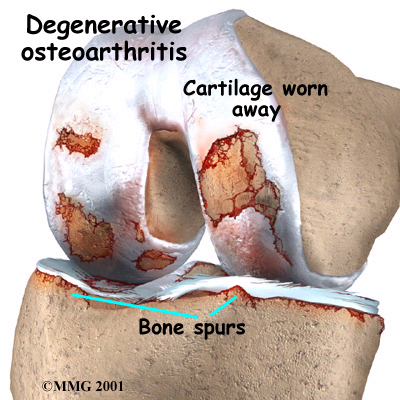
  • long-term damage that occurs due to a process of ‘wear and tear’ – this type of long-term cartilage damage to the joints is known as osteoarthritis.

(The rest of this article focuses on articular cartilage damage.)

Treatment

Non-surgical treatments, such as injection, physiotherapy and the non-steroidal anti-inflammatory drugs (NSAIDs) type of painkillers, are usually recommended for minor to moderate cases of cartilage damage.

In more serious cases surgery may be required. There are a number of surgical techniques available, such as encouraging the growth of new cartilage, or taking a piece of healthy cartilage from elsewhere in the body and using it to replace damaged cartilage.

In the most serious cases, the entire joint may need to be replaced with an artificial joint, such as a knee replacement or hip replacement.

How common is cartilage damage?

It is hard to estimate exactly how common cartilage damage is because many people with mild cartilage damage do not seek medical help. However, cartilage damage is thought to be quite common.

Cases of accidental cartilage damage are most common in people under 35 years old. This is because this age group is more likely to take part in sporting activities where there is a higher risk of injury.

Cartilage damage associated with osteoarthritis is more common in adults over 50 years old. It is also more common in women than in men.

Orthopaedic Surgeon

Dr Kevin Yip Orthopaedic Surgeon Gleneagles Singapore

DR KEVIN YIP

Book Appointment Online for Cartilage Damage Treatment

Learn More About Viscosupplements

What is a viscosupplement?

A viscosupplement is a type of fluid that is injected directly into the knee to help lubricate and cushion the joint. Viscosupplements replace damage synovial fluid to help relieve pain and improve joint function.

What are viscosupplements made from?

Viscosupplements are made from a substance called hyaluronan. Hyaluronan is a natural substance found in the body and is present in very high amounts in joints. The body’s own hyaluronan acts like both a lubricant and shock absorber in the joint and is needed for the joint to work properly.

When should I consider a viscosupplement?

Viscosupplements are for people with Osteoarthritis of the knee who have not received enough pain relief from diet, exercise, and pain medication. If you’ve tried these options and are still feeling pain, ask our doctor if a viscosupplement could help.

What are the side effects?

Side effects with viscosupplements may include pain, swelling, or fluid build-up around the knee.

Knee Osteoarthritis Synvisc Treatment

Ask our doctor about Synvisc – a targeted approach

Call +65 80859224 today.

Prepare for your appointment

Be informed about viscosupplements

Who administers viscosupplement injections?

Our orthopaedic surgeon, Dr Kevin Yip.

How are viscosupplements given?

Viscosupplements are injected directly into the knee. Depending on the type of viscosupplement you receive, it may be given as a series of injections or as a single injection.

What is the procedure like?

Each injection takes a few minutes and can be given in our doctor’s office.

Will the injection hurt?

Our doctor will apply a numbing agent before your viscosupplement injection. You may feel some pressure, but is should not be painful.

What happens after the injection?

You can resume your normal day-to-day activities immediately after the injection, but you should avoid any strenuous activities for about 48 hours.

Synvisc Done by Orthopaedic Surgeon

Dr Kevin Yip Orthopaedic Surgeon Gleneagles Singapore

Dr Kevin Yip
Book Appointment Online for viscosupplement injections Treatment

When diet, exercise, and medication aren’t enough,

Learn More About Targeting Osteoarthritis (OA) Knee Pain at the Source.

You Don’t Have to Settle for Osteoarthritis Knee Pain

It’s time to find the right treatment option for you

Talking to our doctor is the best way to start exploring your treatment options.

And when you do, keep in mind:

Pain affects everyone differently

The severity of your osteoarthritis (OA) as it appears on an X-ray may not reflect the amount of pain you feel. Some people with OA that appears mild on an X-ray may feel a great deal of pain. Others, whose X-rays show severe OA, may feel less pain. Your doctor is relying on you to give a clear description of how your knee feels.

Xray of the Osteoarthritis Knee

Osteoarthritis is caused by more that just cartilage loss

In knees with osteoarthritis, the cartilage protecting the ends of the bones gradually deteriorates, joint fluid loses its shock-absorbing qualities, and bones may begin to rub against each other – all of which may cause the knee pain you’re feeling.

Knee Osteoarthritis

It helps to know your Osteoarthritis treatment option

There are several treatment options available for osteoarthritis knee pain.

These may include:

  • Lifestyle changes. Such as exercises, physical therapy, and weight loss
  • Oral therapies, including pain relievers and nutritional supplements
  • Viscosupplement injections that provide pain relief when lifestyle changes and simple pain medications aren’t enough
  • Steroid injections in the knee
  • Surgery, such as total knee replacement

Talk to us about the risks and benefits of each treatment option to find an approach that is right for you.

Osteoarthritis Knee Specialist

Dr Kevin Yip Orthopaedic Surgeon Gleneagles Singapore

Dr Kevin Yip

Book Appointment Online for Osteoarthritis Treatment