There is an increase in the problem of neck and arm worldwide. An important reason for this is our modern 21st century lifestyle. We are sitting for long hours at work and at home. Many modern office workers and executives are now suffering from neck pain and back pain as a result of this. Neck pain can also come out to the shoulders and hands and cause pain, numbness, tingling and even weakness.

Neck pain used to be seen mainly in those worked in physically demanding jobs like builders, bricklayers, plantation workers, heavy industry workers, construction workers and miners. However, nowadays, there are more executives who come to us for neck pain. We have identified prolonged sitting, a poor posture, overuse of computers, frequent business travel and an unhealthy executive lifestyle as major reasons for this problem. When you sit too long, there is increased pressure in the spine discs.

“A poor posture while sitting such as looking down at a computer screen especially with laptop use is also bad for the neck. The spine is not one bone but about 33 bones with a soft gel like substance called the disc in between.”
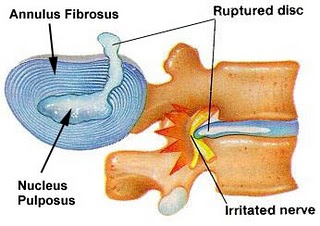
Prolapsed Intervertebral DiscThe disc allows flexibility and movement in the spine. Executives and office staff now work with computers and this prolonged activity with poor posture can cause the spine discs to break down and come out or slip out. These slipped discs can pressure on the nerves and cause neck pain, arm pain, numbness, tingling, and as the problem gets worse even weakness in the hands, arms and even the legs. The worst case scenario is becoming unable to walk, unable to pass urine or pass motion. This can happen gradually or in some people it can happen suddenly. The reason for this is nerve damage from the slipped disc or spinal narrowing.

Cervical Spondylosis

Executives who are bothered by neck pain often go for massages to various types if therapists. If the pain does not get better after three visits to the therapist or comes back after massage therapy, it is recommended that you see a specialist. But do take note that massage therapy or physical therapy done in the wrong way by unqualified people can make the problem worse. A proper spine and nerve examination followed by an MRI of the spine can reveal and confirm the problem. X-rays alone cannot show the nerves or pressure on the nerves from a slipped disc. In some older executives, the neck pain or arm pain is caused by spine stenosis. This is a narrowing in the spine canal which squeezes the spine nerves. A common story that we hear is that the person cannot walk steadily or had weakness in the hands.

Executive neck pain and arm pain can often be treated without surgery. The proper medications and therapy organised by a spine specialist can help the person recover faster and return to his normal lifestyle.

Some people require spine injections to reduce pain. The better type of spine injections treats the root of the problem. This can be done as a day procedure without any surgery. In some executives, the problem has become too serious and requires surgery. Fortunately, modern surgery including microsurgery has advanced to a stage that the risks are low and the recovery can be quick. Monitoring of the spine nerves can be done during surgery to make it safe.

In conclusion, more executives and office workers are suffering from neck pain. If this neck pain is frequent or spreads to the arms, we recommend that you see a orthopaedic specialist for a proper check up to find out the root of the problem.

A healthy lifestyle with less sitting, a good posture and the right exercises with a good diet can also lessen the chance of frequent neck and arm pain.

Neck Pain Spine Specialist

Dr Mathew Tung

Dr Mathew Tung Neurosurgeon

Book Appointment Online for Neck Pain Treatment

Brief Outline of Cervical Spondylosis

Cervical spondylosis is a chronic degeneration of the vertebrae of the neck (cervical spine) and the intervertebral cushions or discs. Bone spurs, or osteophytes, are bony projections that form along joints and are often associated with arthritis. Such spurs themselves can rub against nearby nerves or occasionally on the spinal cord causing pain and limitations in joint motion. The degeneration results from wear on the bones of the cervical spine over time.

Anatomy and physiology

Cervical Spondylosis

Aging and repetitive stress can cause discs of the spine to become drier and less elastic. Such degeneration may cause discs to bulge or in some cases, rupture. When the surrounding ligaments bevome less flexible, the vertebrae develop bone spurs – new areas of bone growth along the margins of existing bones.

Cause of Cervical Spondylosis

Repetitive wear on cervical vertebrae. Excessive and improper weight lifting. Bulging or herniated cervical disc.

Signs and symptoms

Neck pain radiating to shoulders and arms. Loss of balance. Headaches radiating to the back of the head.

Complications if left cervical spondylosis unattended

Cervical spondylosis is a common cause of spinal cord dysfunction in older adults. If the condition isn’t treated, the injury may progress and become permanent. Bone spurs or herniated discs can impinge and put pressure on the roots of one or more nerves of the spinal cord in the neck, producing tingling, burning, weakness or numbness in the arms or hands. Displaced spurs can also float in the system, periodically interfering with joints.

Treatment for cervical spondylosis

Non-Surgical Methods:

Rare and severe cases may require surgery.

Rehabilitation and prevention

Less serious cases of cervical spondylosis respond to exercises with physical therapist, aimed at strengthening and stretching neck muscles. Low-impact aerobic exercises including walking or swimming may also help. While age-related spondylosis may be difficult to prevent, minimising high impact activity, engaging in upper body training and attention to posture may help avoid the injury.

Long-term prognosis

Mild cases of cervical spondylosis respond well after immobilisation of the injury and appropriate physical therapy. More serious cases may require injections of anti-inflammatory agents between the vertebral facet joints or in some cases, surgery to remove bone spurs, particularly if they have broken off from larger sections of bone to become loose bodies.
Book Appointment Online for Spur Formation Treatment

Treatment for pinched nerve

Cause of pinched nerve

Herniated disc pressing on a nerve. Irritation of the nerve due to repetitive stress. Bone spurs or degenerating vertebrae impinging on a nerve.

Brief Outline of Pinched Nerve to the neck

Nerves controlling the shoulder, arm and hand originate within the spinal cord in the neck. Inflammation or compression of one of these structures is known as a pinched nerve or cervical radiculitis, and results in pain, weakness, and loss of movement. Herniation of the cervical discs – often caused by repetitive stress – can impinge on the cervical nerves, also causing the injury.

Anatomy and physiology

Cervical radiculitis occurs when a disc from one of the seven cervical vertebrae making up the upper spine presses against the spinal nerves connecting to the spinal cord. Such nerves branch to numerous areas of the body, and symptoms may radiate from the source along the nerve to areas where the nerve travels. Depending on the affected disc impinging on the cervical nerve, pain may occur in the arm, chest, neck, or shoulders.

Prolapsed Intervertebral Disc

Signs and symptoms of pinched nerve

Pain, weakness, and loss of movement in the neck. Numb fingers. Weak muscles in the arms and chest.

Complications if left unattended

Inflammation and pain associated with pinched nerves may continue or worsen, should the source of the injury not be addressed. The nerve may become permanently damaged through continued pressure and stress, and the condition may point to other (potentially serious) underlying injuries to the vertebrae or spinal cord.

Rehabilitation and prevention

Given proper treatment, the prognosis for cervical radiculitis is generally good. Mild cases usually respond to physical therapy in conjunction with medications such as NSAIDs. Following healing, a program of physical therapy and flexibility / strengthening exercises can help restore to your usual self. Attention to proper technique, particularly during weight training/weight lifting can help prevent pinched nerve injury.

Long-term prognosis

Most cervical pinched nerve injuries resolve themselves without serious medical intervention. More serious or prolonged cases may require surgery to relieve compression of the nerve root.
Book Appointment Online for Pinched Nerve Treatment

Brief Outline of Cervical Nerve Stretch Syndrome

Cervical nerve stretch syndrome, also sometimes referred to as a burner syndrome, results from the stretching (or compression) of the brachial plexus a complex of nerves in the lower neck and shoulder area. The injury is common in contact sports including hockey, football, wrestling, and rugby. Sports injuries to the brachial plexus are characterised by a burning sensation that radiates down an upper extremity. Symptoms may last anywhere from two minutes to two weeks.

Anatomy and physiology

Brachial Plexus

The brachial plexus are nerves originating in the brain. They exit the cervical vertebrae, extending to peripheral structures including muscles and organs, (to which they transmit motor and sensory nerve impulses). A series of cervical nerve roots within the brachial plexus send fibres to the shoulder and trapezius muscle, the deltoid muscle and distal radius, the elbow and the fingers.

Cause of the Cervical Nerve Stretch Syndrome

Blow to the head or shoulder, especially in a football tackle. Ear to shoulder bending with rotation (compression of cervical nerves). Hyperextension of the neck.

Signs and symptoms

Severe, burning pain, radiating from the neck to the arm and/or fingers. Parasthesia or numbness, tingling, pricking, burning, or creeping sensation of the skin. Muscle weakness.

Complications if left unattended

Burning and stinging symptoms will persist and often worsen. Further damage to the peripheral nerves can result should the injury be ignored. Symptoms may also indicate spinal cord injury, with potentially serious complications.

Treatment for Cervical Nerve Stretch Syndrome

  • Physiotherapy
  • Oral Medications

Rehabilitation and prevention

Rehabilitation for cervical nerve stretch syndrome usually entails physical therapy. Following a healing phase, such therapy seeks to improve cervical range of motion and to strengthen cervical muscles, with particular attention to the muscles supporting the injured brachial plexus nerve. Proper protective gear, appropriate technique and upper-extremity strength training can help prevent the injury.

Long-term prognosis

Prognosis for the injury is generally good, though some athletes develop chronic form of the condition and a high rate of recurrence has also been noted. In rare cases, nerve injury requires microsurgery to repair nerve damage.
Book Appointment Online for Cervical Nerve Stretch Syndrome Treatment

What is Neck Pain?

Neck Pain
Neck Pain

Pain located in the neck usually at the back or sides.

How is Neck Pain Evaluated?

Neck pain is evaluated by reviewing the history of the symptoms. In reviewing, the location, intensity, duration, and radiation of the pain will be noted. Any past injury to the neck is also taken into account. The neck is examined at rest and in motion. An examination of the nervous system is performed to determine whether nerve involvement is present. Further testing includes x-ray evaluation and MRI scan.

What are the Causes?

Neck pain can come from a number of disorders and diseases of any tissues in the neck, such as degenerative disc disease, neck strain, whiplash, a herniated disc, or a pinched nerve.

What are the Treatments?

The treatment of neck pain depends on its precise cause. Treatment options include rest, heat/ice applications, traction, soft collar, traction, physical therapy (ultrasound, massage, manipulation), local injections of cortisone or anesthetics, topical anaesthetic creams, topical pain patches, muscle relaxants, analgesics, and surgical procedures.
Book Appointment Online